The Informed Buyer · Hilton Head Island & Bluffton, SC
Walk Slowly. The Home Is Telling You Something.
A room-by-room guide to the details that will shape your daily life in the Lowcountry and the ones most buyers only discover after they move in.
Luxury Property Guide · Hilton Head Island & Bluffton, SC
Most buyers tour a home the way they scroll a listing: quickly, emotionally, looking for the things they were hoping to find. The kitchen island. The primary closet. The view. And those things matter. But the home that serves you beautifully for twenty years is the one where someone also checked the subfloor, stood at the kitchen sink at 4 in the afternoon, tested the water pressure with two showers running, and counted the closets twice. Here is how to tour a Lowcountry luxury home like someone who has lived in one before.
The Exterior · Before You Walk In
The Skin of the Home Is a Report Card
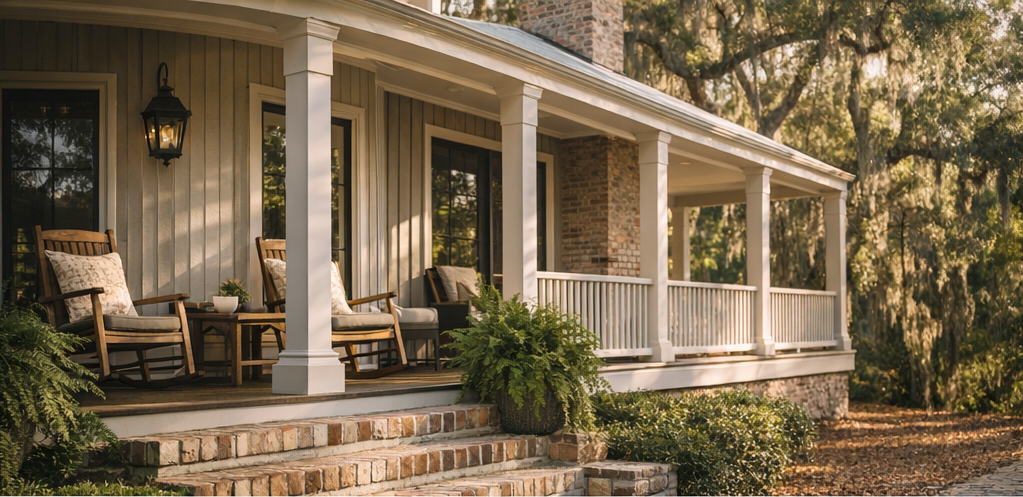
Before you reach the front door, stop and look at the decking, the trim, the soffits, and the siding. In a climate that delivers salt air, summer humidity, and the occasional named storm, the materials wrapping a home matter more here than almost anywhere else in the country. What you are looking for is evidence that a previous owner understood where they were building.
Composite decking, from manufacturers like Trex, TimberTech, or Fiberon, is among the most meaningful practical upgrades a Lowcountry home can have. Real wood decking in this environment is a maintenance commitment. It requires regular cleaning and sealing, and it will eventually rot at fasteners, ledger boards, and anywhere moisture sits. Composite decking does not absorb moisture the same way, does not splinter, and typically reduces maintenance. If the decking is wood, look closely at the boards near the house and at any steps. Press on them. Soft material tells you what may be coming.
What to actually do
Walk the full perimeter. Bring a key or a small flathead screwdriver.
Press the blade against wood trim at every corner, around window frames, at the base of door surrounds, and along the bottom edge of any wood siding. Solid resistance is a good sign. Any give at all means moisture has likely been living there. In the Lowcountry, moisture intrusion in trim boards is not just cosmetic. It can migrate into the wall cavity and the sheathing. Find it on the tour, not six months after closing.
Look up at the roof. If you can see the roof pitch from ground level, look for lifting at the edges of shingles or visible waviness in the field. A standing seam metal roof is often considered one of the strongest choices in coastal construction because of its durability and wind performance. Asphalt shingle roofs on coastal properties often have a shorter effective lifespan than inland homes. Ask when the roof was installed. If it is older, that may be a near-future budget item.
The Main Living Area · Where the Light Lives
That West-Facing Wall of Windows Is Beautiful in December
Stand in the main living area and look at which direction the large windows and glass doors face. In the Lowcountry, a home with major glazing oriented to the west can become genuinely uncomfortable on a summer afternoon unless it has been designed to manage that exposure. The sun can pour through floor-to-ceiling glass, raise interior temperatures, fade furnishings, and overwork the air conditioning system.
This is not necessarily a reason to pass on a home. It is a reason to understand what you are buying. Look for solar shades, motorized shades, shutters, or quality Low-E windows. Impact-rated windows with Low-E coatings can be especially valuable in coastal properties. Older or builder-grade glass on a west-facing wall can become both a comfort issue and an energy-cost issue.
What to actually do
Tour west-facing rooms twice if you can: once in the morning and once later in the day.
The same room that feels bright and inviting at 10 AM can feel harsh by mid-afternoon in summer. If a second visit is not possible, look for fading lines on floors, rugs, and upholstery near the windows. That is quiet evidence of how the room performs seasonally.
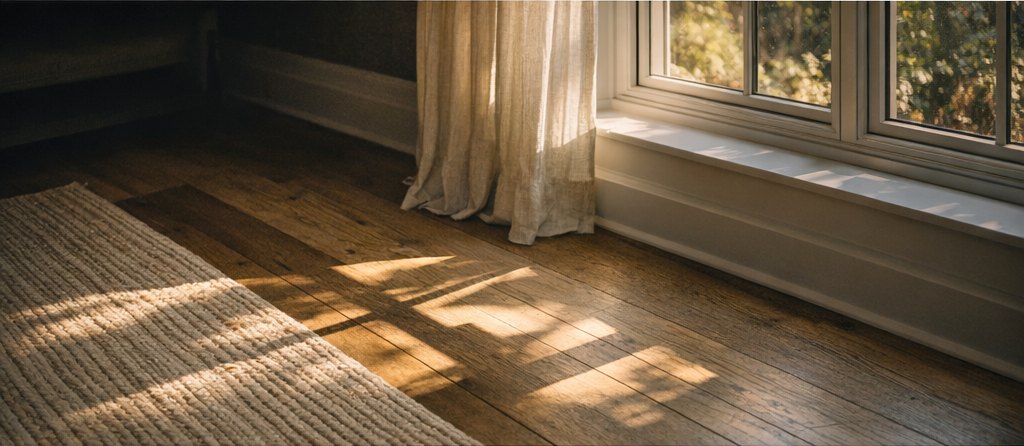
While you are in the main living area, look at the floors. Luxury vinyl plank flooring is common in new construction and renovation, and it can perform very well in this market. But on elevated homes, which are common in the Lowcountry, LVP needs a flat, stable, dry subfloor. If the subfloor has flex, soft spots, or moisture history, you may eventually hear it and feel it underfoot. Ask whether any subfloor repairs or leveling were done before installation.
The Kitchen · Test Everything
The Kitchen Will Tell You About the Whole House
Turn on the kitchen faucet all the way. Then turn on a bathroom faucet in the nearest hall bath. Come back and watch the pressure. In a properly functioning home, you should not notice a major difference. If pressure drops significantly when a second fixture opens, that can point to plumbing limitations, aging lines, or other system issues worth evaluating further.
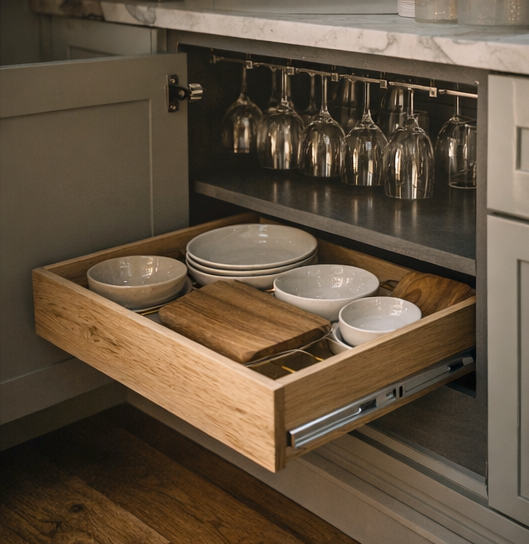
Look at the cabinet interiors as well as the faces. Open every lower cabinet and check the back corners and the sink base. Moisture under a kitchen sink is not uncommon, but the question is whether it has been managed or ignored. A replaced cabinet base or drain pan may suggest someone addressed a problem thoughtfully. Soft particleboard, dark staining, or an odd smell often suggests the opposite.
Test this
Range hood ventilation
Hold a piece of paper near the hood at full speed. It should pull firmly. A recirculating hood that does not vent outside is a meaningful downgrade in a luxury kitchen, especially in a humid coastal climate.
Count this
Storage, carefully
Count the pantry space, cabinet depth, and whether there is a utility or charging zone. A beautiful kitchen with limited functional storage can feel very different once you actually live there.
The Primary Suite · Where Daily Life Is Won or Lost
The Closet That Looked Large on the Tour
Storage is one of the most quietly disappointing features in many Lowcountry home purchases. The house may be beautiful, but practical storage often falls short, especially in older floor plans and second-home designs where utility was not the top priority.
Walk the primary closet slowly. Bring a mental inventory of your actual wardrobe and household. A closet that photographs beautifully may not function the same way once it holds real life. Measure hanging space. Look for shelf depth. Check whether the storage burden will fall to freestanding furniture elsewhere.
What to actually do
Do a storage audit of the entire home, not just the closets.
Ask yourself: where does the luggage live? Where does the vacuum go? Where is the linen closet? Where do beach chairs, golf clubs, paddleboards, and seasonal items get stored? If the answer to more than two of those questions is “I’m not sure,” the home likely has a storage problem.
In the primary bath, run the shower and let it heat fully. A well-functioning luxury home should deliver hot water without an extended wait. If it takes much longer than expected, the water heater may be undersized or there may be no recirculating system. Many older Hilton Head homes have water heaters in the attic, which is common in this region, but it is still worth asking your inspector to evaluate age, condition, drain pan setup, and overall performance.
The Screened Porch & Outdoor Living
The Room You Will Use More Than Any Other
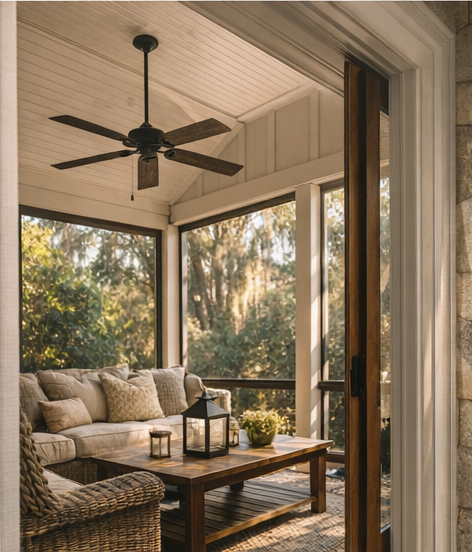
In the Lowcountry, the screened porch is not just a bonus space. For much of the year, it becomes the real living room. Its orientation, construction quality, airflow, and drainage all shape daily life more than many buyers realize.
Look at the ceiling height and the fan size. Look at the screening material. No-see-um mesh can be especially valuable here during the warmer months. Check how the porch floor is finished and whether it appears designed to handle the frequent summer rain and humidity this region sees.
Look for this
Porch orientation
A south or east-facing screened porch is often more comfortable for longer stretches of the year. A west-facing porch without adequate shade can become much warmer and brighter than buyers expect.
Check this
The transition from inside to out
The threshold between the main living area and the screened porch is a high-traffic, high-moisture zone. Check both sides of the door frame for staining, softness, or discoloration.
The Garage & Utility Spaces
Where the House Takes Care of Itself
In many Lowcountry communities, garages are smaller than buyers from other markets expect. Look carefully at what the space can actually hold. Ceiling height, storage systems, overhead racks, and utility features matter because the square footage is fixed.
Ask about the fuel source for gas appliances, fireplaces, and outdoor grill connections. In many parts of Hilton Head Island and Bluffton, propane does the work that natural gas handles in other markets. It is helpful to understand the setup, tank location, lease arrangement, and fill schedule before you own the home.
What to actually do
Ask about the generator situation specifically.
Whole-home standby generators are not universal in this market. Portable generator hookups and transfer switches are still worth asking about. If there is no generator provision, talk to an electrician after closing about options for safely powering essential circuits during outages.
Locate the main electrical panel and ask about its age and capacity. A modern luxury home often benefits from a 200-amp service, updated equipment, and room for future needs such as an EV charger. If the panel is older, that is a worthwhile inspection conversation before closing.
— ✦ —
The Closing Thought
The Home That Earns Your Trust Over Time
The homes that make buyers happiest in this market are often the ones where someone slowed down on the tour. Not to hunt for problems, but to understand the home. A screened porch that faces the right direction, a properly prepared subfloor, a garage that truly works for your lifestyle: these are the details that rarely show up in listing photos but shape your daily experience for years.
- Nicky Gleason
Hilton Head Island & Bluffton Real Estate Advisor
Luxury Homes of Hilton Head
Updated Spring 2026

Ready to tour with a sharper eye?
Work with an agent who understands how Lowcountry homes actually live, not just how they photograph. The right guidance before you write the offer makes all the difference.
Get in Touch This guide is intended for informational purposes only and reflects general observations of Lowcountry properties. Buyers should conduct their own inspections and due diligence prior to purchase.